
Cat-Friendly Veterinary Care in Lake in the Hills, IL
Cats Are Not Small Dogs
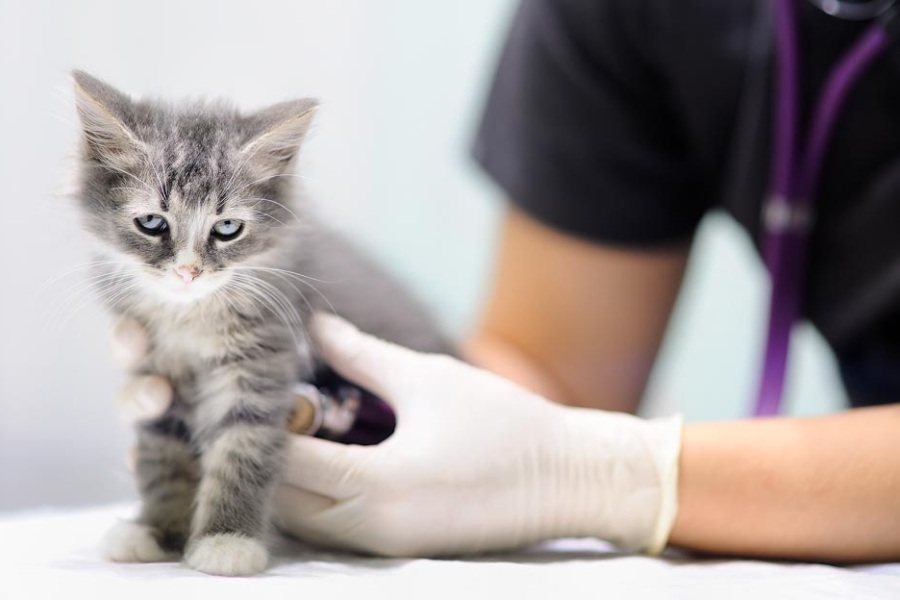
Cats have their own medicine, their own behavior and their own reasons for hiding both. A practice that treats them as a smaller version of a dog will miss things, and it will frighten a patient who did not need to be frightened. Respect for cats is where we start.
That is not a philosophy we put on a wall. It shaped the building, the exam rooms and how our team handles every feline appointment. Here is what it looks like in practice.
No Waiting Room Mayhem
Many hospitals tout a separate waiting room “area” for cats and dogs. At Healthy Paws Animal Hospital we took this one big step further: no waiting room. Walk in our doors, meet our highly trained and smiling staff, and head straight to your exam room. That is it. No dogs on leashes, no door opening and closing, no strange smells or sounds. Just a personal escort to your exam room where your cat will be attended to by their personal veterinary technician and doctor.
A Window on the World
Our exam rooms have floor to ceiling windows, hidey spots under the cabinet, and space to explore. While some of our feline friends enjoy staying in their carrier, many enjoy looking outside at the world, sometimes even seeing the birds flying to their nest in our hospital sign.
Cats do not like feeling captured. Wanting to always have an escape route is part of their survival DNA. These features help our cat patients feel less trapped. Sunlight and open space is often comforting for both pets and humans, helping diminish anxiety for all involved. We are only as good as the care we can provide, and if a cat patient feels stressed before the doctor walks in the room, that is not possible. This is why starting with an exam room setup for success is so important to us.
Read the Room
Being able to read the room is imperative when dealing with cats. We often say the window can close quickly when we are handling felines. A little twitch of the tail, stiffening of the back, or change in ear position may be the only sign before a cat says no more. And contrary to anyone’s misguided belief, if a cat decides they do not want something, their 10-pound body will ensure it does not happen. As a team we pride ourselves in working with our cat clients and patients, figuring out how to respectfully take care of their health needs while keeping everyone safe.
Calming Components
Whether it be soothing scents, hugging body wraps, hiding under a towel, or Easy Cheese, we work to find what makes your cat calm. What works for one may not work for another, so we shift and adapt, doing the dance to keep cats as comfortable as possible throughout their visit. For our particularly fearful friends we do not push beyond their limits. We instead give owners a variety of options on how we can use safe medications to help the situation.
Cat Care at Every Age
Kittens
Kittens come to us every three to four weeks through their first months for vaccinations, deworming and developmental checks, along with feline leukemia testing and a conversation about spay or neuter timing, nutrition and litter box habits. Those visits are also where a kitten decides what this place is. Handled gently and allowed to explore the room on their own terms, most of them decide it is fine here, and that decision makes every visit for the next twenty years easier.
Adult Cats
An annual wellness exam for an adult cat is not about the vaccinations. It is about weight, teeth, and the record we build year over year. Cats are notorious for not showing signs of illness until they are sometimes dangerously sick, so the comparison between this year’s exam and last year’s is frequently what finds a problem while we can still do something about it. Dental disease in particular is common, painful and easy to miss at home.
Senior Cats
Cats are considered senior between eight and ten years of age, and from that point we recommend an exam every six months. Senior visits include bloodwork and urinalysis to screen for kidney disease, hyperthyroidism and diabetes, blood pressure when it is indicated, and an honest conversation about appetite, weight, mobility and comfort. All three of those diseases are common in older cats, all three are treatable, and all three are found in bloodwork long before they are found in a living room.
What You Notice at Home Matters Most
Cats hide disease better than any other species we treat, so the earliest evidence of a problem is almost never something we find on a table. It is something an owner noticed: a change in weight, more water in the bowl, a cat sleeping somewhere new, larger clumps in the litter box.
Dr. Burgess has written in detail about the subtle signs cat owners should watch for, and it is worth reading before your cat’s next visit. Bring what you have noticed with you. It is frequently the most useful thing that happens in the exam room.
Your Cat Deserves a Team That Gets It
Cats are not an afterthought here. We consider a cat a puzzle with a great many pieces, and when an owner and our team work on it together we are able to put together a complete picture of that cat’s health. That is the whole job, and it is one we genuinely enjoy.
We are privately owned and have cared for cats in Lake in the Hills, Algonquin, Huntley, Crystal Lake, Cary, the Village of Lakewood and Woodstock since 2010. Call us at (815) 322-5400 or request a visit online.
Frequently Asked Questions
How often should my cat see a veterinarian?
At least once a year, twice a year as they get older, and as often as necessary to keep them healthy.
My cat seems healthy. Do they still need annual exams?
Yes. While cats may seem to run on autopilot, their medical needs do not. Our goal is to detect disease early when we have a chance to intervene and prevent life threatening consequences. This can only be done by having a hands on relationship with a veterinarian.
At what age is a cat considered senior?
Between 8 and 10 years of age.
Can you work with a cat who has had a bad experience at the vet before?
Yes, and we would rather know about it in advance. We do not push a frightened cat past their limit. We change our approach, give them time, and where it is warranted we will discuss safe medications that make the visit possible instead of forcing one that teaches your cat to dread the next one.