
Fearful Friends in Lake in the Hills, IL
Fearful Friends
Many of our patients experience fear, anxiety, or panic at the veterinary office. If we do not acknowledge our patient’s emotions, aggression can be the outcome – especially if a pet does not feel like there is any other option. This is why, as veterinary professionals, we monitor our patients closely looking for signs of progressing anxiety. At Healthy Paws we do a variety of things to read a pet’s emotional state thus allowing us to provide as relaxing of an environment as possible throughout a visit.
What does “Fear Free” mean at Healthy Paws Animal Hospital?
Really Fear-Less
“Fear Free” is perhaps a misnomer, as it is natural for humans and pets to feel fear in new or “odd” situations and many pets experience fear, anxiety, or panic at the veterinary office. This is part of survival. Fear Free care means we actively recognize and respect your pet’s emotional experience and adjust our approach to reduce stress however possible. By listening to what your pet is telling us and respecting signs of anxiety, we can create a safer, calmer, and more positive veterinary visit.
Why is fear and anxiety taken so seriously in veterinary care?
It is rude to not listen
When a pet feels trapped or overwhelmed, fear can escalate into defensive behaviors such as growling, snapping, or biting. These reactions are not “bad behavior”- they are communication. By identifying early signs of anxiety and responding appropriately, we can prevent fear from escalating and protect both pets and people.
How do we recognize when a pet is anxious or stressed?
Body language, body language, body language
Our team is trained to monitor body language and subtle emotional cues, such as posture, facial expression, movement, and avoidance behaviors. These signals help us understand when a pet is becoming uncomfortable so we can slow down, change techniques, or take a break before anxiety worsens.
What steps do you take to reduce fear during a visit?
Flexibility is the key
We individualize each visit based on how your pet feels and responds. Some of the techniques we commonly use include:
- Allowing pets to approach us first and giving space during introductions.
- Avoiding direct eye contact or head-on approaches.
- Approaching from the side and working at a comfortable level for the pet.
- Offering high-value treats and positive distractions.
- Adjusting how pets are held based on their comfort level.
- Choosing sample laboratory collection techniques that minimize visual or physical stress.
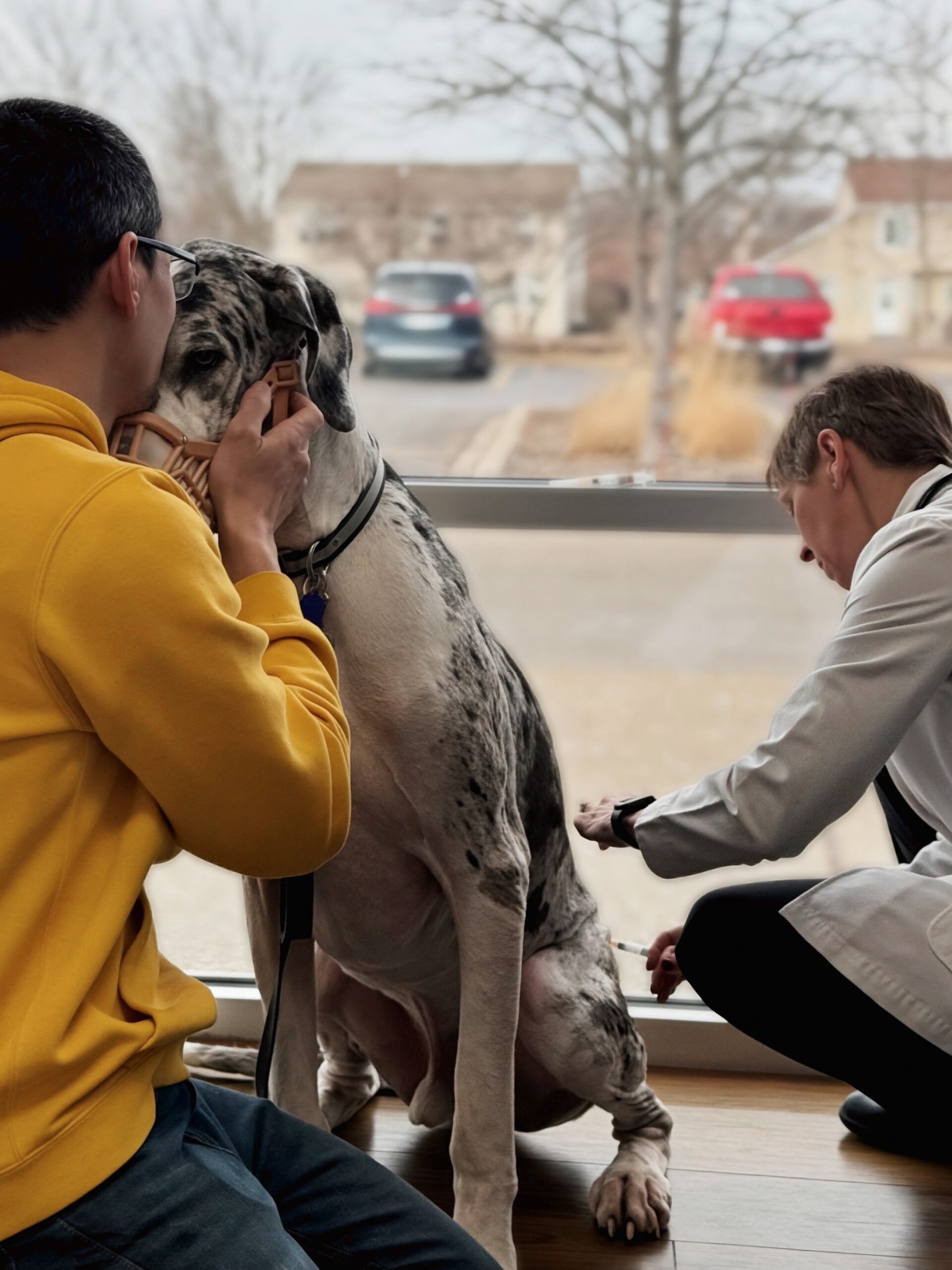
- Allowing pets to face their owner, look out a window, or stay in more open spaces.
- Reducing or eliminating waiting room interactions with other pets.
Will we ever force an exam if a pet is unreasonably scared?
No
One of our most important commitments is that we do not fight an animal or force a situation that causes excessive stress. If a pet is telling us they are uncomfortable, we listen. We may pause, reassess, and explore alternative approaches that better support your pet’s emotional well-being.
What tools or techniques might you use if my pet is very fearful?
If needed, we may use calming or safety tools to help lower anxiety and allow a visit to proceed more comfortably. These may include:
- Muzzles (including basket muzzles that still allow eating and panting)
- Towels to gently cover the eyes
- Slip leads for safer, more controlled handling
- Elizabethan collars (“lampshade) as an alternative to muzzling
- Temporarily separating pets from their owners when protective behavior increases anxiety. Many pets feel a need to protect their owners and this is too much for them to handle when they also do not understand what we are doing thus increasing their anxiety.
Each option is chosen thoughtfully and only when it helps reduce stress and improve safety.
Does this mean my pet is aggressive or poorly behaved?
There are not bad dogs, there are just scared dogs
Using special techniques, discussing behavior, or even choosing not to complete an exam does not mean a pet is bad, aggressive, or ill-mannered. It simply means your pet is communicating discomfort – and we respect that message. Listening now helps prevent worsening fear and long-term anxiety.
Do you use or recommend medication for fearful pets?
Yes, when appropriate, and individualized for the pet
We often use safe, well-studied medications to help reduce anxiety and take the “edge” off for fearful pets. These medications are similar to the calming effect of a glass of wine or a massage and are intended to promote relaxation – not sedation.
Medication plans are customized for each pet, and we often recommend a trial at home before a future visit to ensure proper dosing and comfort.