Pet Surgery in Lake in the Hills, IL
Discover compassionate pet surgery at Healthy Paws Animal Hospital in Lake in the Hills, IL. Enhancing lives with expertise and empathy.
Pet Surgery
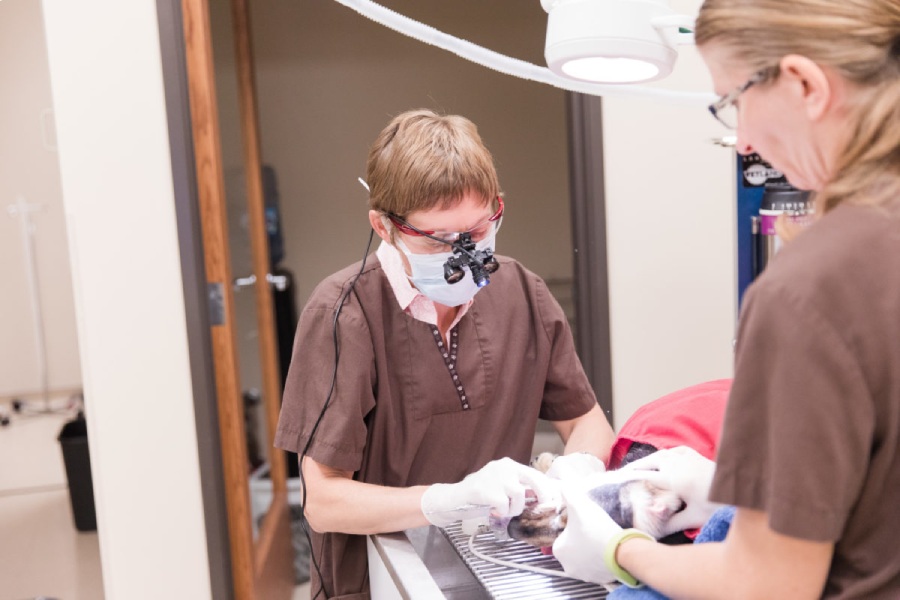
When your pet needs surgery, you deserve to know exactly what is happening and why. At Healthy Paws Animal Hospital, every surgical patient receives individualized anesthetic protocols, dedicated technician monitoring, and proactive pain management from the moment they arrive to the moment they go home.
Below find answers to common questions about pet surgery at Healthy Paws.
When does my pet need surgery?
Hopefully never
Surgery becomes necessary for a wide range of reasons. Injuries or trauma sometimes require surgical repair to restore function and comfort. Chronic conditions like hip dysplasia, torn ligaments, or certain tumors may be able to only be fixed with surgical intervention.
Preventive surgery matters too. Spaying or neutering your pet reduces the risk of certain cancers, eliminates the risk of uterine infections, and helps control our pet population.
If you are unsure whether surgery is the right next step for your pet, our team will walk you through everything and provide options clearly and honestly, discussing pros, cons, and alternatives.
Is pre-anesthetic bloodwork required? Why does my pet need a catheter?
An ounce of prevention
We recommend pre-anesthetic lab work for every patient before surgery requiring anesthesia. Bloodwork screens for underlying organ or blood abnormalities that could affect how your pet responds to anesthesia. These tests look for things that may not be visible on the outside.
An IV catheter is a small tube that is placed in a leg vein before every procedure. It allows us to deliver fluids to support safe blood pressure and hydration. It also gives us immediate access to administer medications if needed.
At Healthy Paws, pre-anesthetic bloodwork and IV catheter placement are standard and included with all anesthetic procedures. We do not offer them as optional add-ons. It is our responsibility to keep your pet as safe as possible. We do not expect owners to make this decision for their pet. It is enough worrying about a loved pet on surgery day. Lowering risk is always our goal.
How is my pet monitored during anesthesia?
Closely, continuously, and by degreed team members
Humans are the most important “monitor” for any procedure. Every surgical patient is monitored by a dedicated Certified Veterinary Technician (CVT) or Degreed Technician throughout the entire procedure. This is their only job during surgery, watching your pet, keeping them safely asleep and comfortable.
Additional monitoring equipment tracks pulse oximetry (oxygen levels in the blood), EKG (heart rhythm), end-tidal CO2 (how well your pet is breathing), and blood pressure. Together, these help give us a complete picture of how your pet is tolerating anesthesia in real time.
If anything shifts, we know immediately and can respond swiftly and with confidence.
What medications does my pet receive?
Before, during, and after, pain management is built in
Anesthetic drugs are tailored to each individual pet based on their size, health status, and procedure being performed. There is no one-size-fits-all protocol here.
On the morning of surgery, your pet receives a sedative and pain medication before anything else begins, often right after walking through our door. During the procedure, short-acting drugs allow safe placement of a breathing tube, and isoflurane gas maintains general anesthesia throughout.
Pain management is most effective when it starts before a procedure and continues uninterrupted. Preventing pain, and staying on top of it, is essential.
Where does my pet recover after surgery?
In front of our very eyes
After surgery, your pet is placed on a soft bed and covered with blankets in our treatment area. Warmth during recovery matters, it supports circulation and helps your pet come out of anesthesia more comfortably.
Both the technician’s and doctor’s desks are located directly in the recovery room. Your pet is never out of sight during this critical window. This allows us to be a part of their recovery from start to finish.
What should I expect when I pick up my pet?
Information and a support system
We provide thorough discharge instructions before your pet goes home. We will walk you through everything, no assumption that you already know what to do, all questions welcomed.
In general, most pets need to remain quiet with limited activity for at least seven days following surgery. A protective collar (Elizabethan collar) is often sent home to prevent licking or chewing at incision sites.
If you have questions after you get home, we are here. Do not hesitate to call.
Why choose Healthy Paws for my pet's surgery?
The details matter, we take them seriously
Surgery is one of the most stressful things a pet owner faces. We understand that. Our team approaches every surgical case with the same care and deliberateness we would want for our own pets.
Our protocols are complex, researched, practiced, and thorough. This is a big day for owner and pet. Shortcuts are not acceptable. Pre-anesthetic bloodwork, dedicated technician monitoring, individualized drug protocols, warm recovery, and thorough discharge education are not extras. They are how we work.
We are proud to partner with the families of Lake in the Hills, Crystal Lake, Algonquin, Huntley, and the surrounding communities. Your pet deserves care that takes nothing for granted.