
Pet Dentistry in Lake in the Hills, IL
Healthy Paws Animal Hospital provides professional care, individualized advice, and compassionate pet dentistry for the best possible oral health.
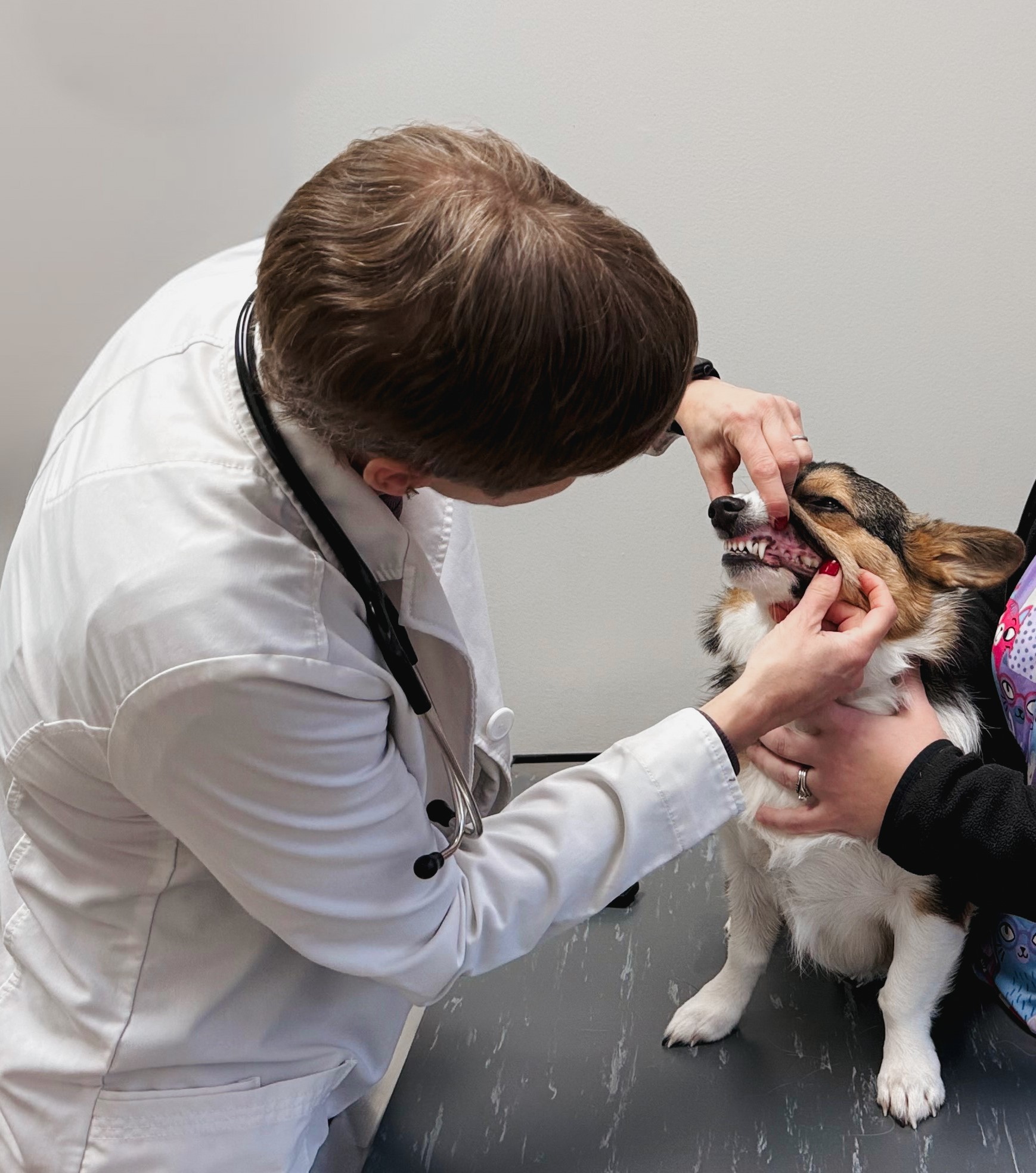
Pet Dentistry
Dental disease is the most common health problem we see in dogs and cats and yet one of the most preventable. At Healthy Paws Animal Hospital, our approach to dentistry goes beyond a “cleaning.” We assess, diagnose, treat, and educate so that you and your pet leave better off than when you arrived.
Below find answers to common questions about pet dental care at Healthy Paws.
Why does my pet's dental health matter?
Bad breath is more than just an odor
More than 50% of dogs and cats over the age of one have some degree of periodontal disease or gum and tooth disease. It is one of the most common issues we see.
Here is what that means for your pet: Dogs have 42 teeth, cats have 30. Just like humans, they accumulate plaque, a sticky bacterial film, on those teeth every single day. Left alone, plaque then hardens into tartar which is almost like concrete in hardness. Tartar leads to gum inflammation, root decay, and ultimately tooth loss. The bacteria involved do not just stay in the mouth. They can enter the bloodstream and affect the heart, kidneys, and liver over time. Additionally, periodontal disease is often painful. A diseased tooth becomes essentially a splinter in the mouth, with the body trying to push the offending tooth out.
Dental health is whole-body health. We take it seriously because the consequences of ignoring it are real.
What signs of dental problems should I watch for?
If only they would tell us it hurts
Bad breath (halitosis) is the most common sign owners notice and over time it can become normal to have a pet with “doggie” mouth or “stinky” mouth. But persistent halitosis goes hand in hand with bacterial overgrowth in the mouth.
Other things to watch for: Yellow or brown deposits on the teeth, trouble chewing or avoiding certain foods, pawing at the mouth, increased sensitivity around the face, or reluctance to let you touch their face or muzzle. Any of these can be indicators of underlying dental disease.
Unfortunately, many pets with significant dental pain show no obvious signs at all. Owners often do not realize how much pain they were in until an offending tooth is removed and suddenly their pet’s personality changes. This is why regular exams matter. We are looking for signs that pets may not be showing their owners.
Does hard kibble help keep my pet's teeth clean?
Hard No
We hear this one often. The belief that crunching dry kibble scrubs tartar off teeth is widespread, but this is not accurate.
When pets eat, they do not really chew the way we do. They bite down and break kibble apart and that action does not meaningfully contact the tooth surface where tartar forms. Plaque can be managed with brushing. Tartar, once formed, is more like concrete. It has to be removed professionally, under anesthesia, with dental scaling equipment.
What does help: Tooth brushing, VOHC-approved products (more on that below), and regular professional cleanings.
What is a COHAT and why does my pet need anesthesia for it?
Tell a dog or cat to say aaaahhhh
COHAT stands for Comprehensive Oral Health Assessment and Treatment. It is the veterinary equivalent of a thorough dental cleaning that includes scaling, polishing, full dental charting, and digital dental radiographs (x-rays).
Anesthesia is required because a complete, safe exam cannot be done on an awake pet. Dogs and cats will not hold still for probing, scaling, or x-rays. More importantly, without full access to every surface of every tooth, including below the gumline, the cleaning is incomplete and problems are missed. Some may offer “awake” dental cleanings, however this is not anywhere near what is required for appropriate dental health and is not able to address disease that causes oral pain.
The same anesthetic safety protocols we use for surgical procedures apply here: Pre-anesthetic bloodwork, IV catheter, continuous monitoring by a dedicated trained technician, and individualized pain management throughout.
What can a COHAT find that I would not notice at home?
Pandora’s box
Dental x-rays reveal what is happening below the gumline and inside the jaw, areas completely invisible during a visual exam. A COHAT allows us to identify:
- Extra teeth, which can cause crowding and accelerate periodontal disease.
- Missing teeth that never erupted and may form cysts in the jaw, similar to impacted wisdom teeth in people.
- Discolored or dead teeth, which often look fine but are causing pain.
- Fractured or broken teeth, which are painful even when pets do not show it. Dogs and cats are wired to hide discomfort.
Finding these problems early changes the outcome. Catching a fractured tooth before infection sets in is a very different situation than treating an abscess or having multiple teeth impacted because of one ignored bad tooth.
When is tooth extraction recommended?
Sick teeth are like splinters
Not every problem tooth needs to come out, but when a tooth is diseased from root decay, fracture, crowding, or infection, extraction is often the most effective way to relieve pain, clear infection, and protect the surrounding teeth from further damage.
A sick tooth is like a splinter. The body tries to expel it, but that process is slow and painful. Removing the source, the diseased tooth in this case, resolves the problem.
If extractions are recommended, soft food is suggested for the initial days or weeks to allow healing. Most pets, even those who have had multiple or full-mouth extractions, return to eating hard kibble once healed. Losing diseased teeth does not diminish quality of life, however keeping them often does.
How can I care for my pet's teeth at home? What is VOHC?
Brush, baby, brush
Brushing your pet’s teeth every other day is the most effective way to slow plaque accumulation. Daily is ideal.
We also recommend VOHC-approved products. The Veterinary Oral Health Council independently evaluates dental foods, treats, chews, and water additives and certifies those with evidence behind them. These products will not replace brushing, but they help reduce plaque and tartar buildup between cleanings. This is why regular exams and home dental care work best together.
Things to avoid for overall dental health include hard chews, bones, or toys that you can not push your fingernail into. If it is that hard, it can fracture a tooth. Antlers, bones, and hard nylon toys are common culprits.
Our team will walk you through specific product recommendations and brushing technique at your pet’s visit, as we want home care to actually work for your individual pet and household.
How often does my pet need a professional dental cleaning?
How often do you see the dentist?
We discuss dental health at every wellness visit and assess each pet’s individual needs. Some pets develop tartar faster than others due to genetics, diet, or home care habits.
Once a professional cleaning becomes necessary, it will typically need to be repeated every one to two years. The goal of home care and VOHC products is to extend the time between professional cleanings, not eliminate them.
We recommend starting early. Younger pets benefit most from establishing good oral hygiene habits. And catching early-stage disease means simpler treatment, shorter procedures, and less cost over time.
We are proud to partner with the families of Lake in the Hills, Crystal Lake, Algonquin, Huntley, and the surrounding communities. Your pet deserves care that takes nothing for granted.